The AI-Powered Capacity Intelligence Platform
While others analyse what happened, MyIQ Health predicts what will happen -- powered by Claude AI and proven Azure infrastructure.
Technical Architecture
AI-first technology stack built on 10+ years of production-grade infrastructure

Data and Analytics Platform
INTEGRATE
MyIQ Gateway, Azure Functions, HL7 FHIR connectorsIngest and normalise data from heterogeneous hospital source systems: PAS/EMR (TrakCare, iPM), HL7/Rhapsody messaging, rostering (Core Schedule), financials, lab/radiology.
CONSOLIDATE
Azure SQL Database, Kimball star schema, Azure Data FactoryEnterprise data warehouse with health-specific Kimball dimensional modelling. Automated ETL for admissions, discharges, transfers, bed census, rostering, and financial data.
ANALYSE
Power BI Premium, DAX-based health KPI modelsPower BI semantic models with pre-built health KPIs. Real-time dashboards with drill-down views for capacity planners, operations managers, and executives.
PREDICT
Best-practice time-series forecasting, Azure MLAI forecasting engine using industry best-practice time-series models for demand and occupancy forecasting. ~96% average forecast accuracy demonstrated across 14 Australian hospitals.
ASK
Anthropic Claude via MCP (Model Context Protocol)Conversational AI powered by Claude for natural language capacity queries. Agentic architecture -- Claude orchestrates answers from data warehouse, forecast models, and documents in real-time.
MyIQ Health vs Traditional Analytics
| Capability | Traditional Analytics | MyIQ Health |
|---|---|---|
| Primary Focus | Historical reporting and visibility | AI-powered capacity intelligence |
| Decision Support | Describes what happened | Predicts what will happen |
| AI Capabilities | Limited or none | Claude AI orchestration + ML forecasting |
| Implementation | Complex consultant-driven deployment | Rapid integration through proven methodology |
| Team Approach | Generalist across multiple domains | Specialist hospital capacity experts |
| Data Access | Dashboards and reports | Conversational AI + dashboards + reports |
| Value Delivered | Comprehensive operational reporting | Proactive bottleneck prevention + reporting |
Core Modules
Demand Forecasting
Predict patient flow before capacity issues occur. Analyse admission patterns, seasonal trends, and external factors. Generate actionable predictions in advance.
Resource Optimisation
Allocate staff based on predicted needs. Anticipate staffing requirements before shortages occur. Balance workloads across departments proactively.
Bottleneck Prevention
Identify and prevent constraints before they impact care. Predict capacity conflicts, anticipate bed availability challenges, and prevent resource shortages.
Integration Capabilities
Ready-made healthcare connections. PAS/EMR systems, Laboratory Information Systems (LIS), Radiology Information Systems (RIS), staffing and scheduling systems.
Platform in Action
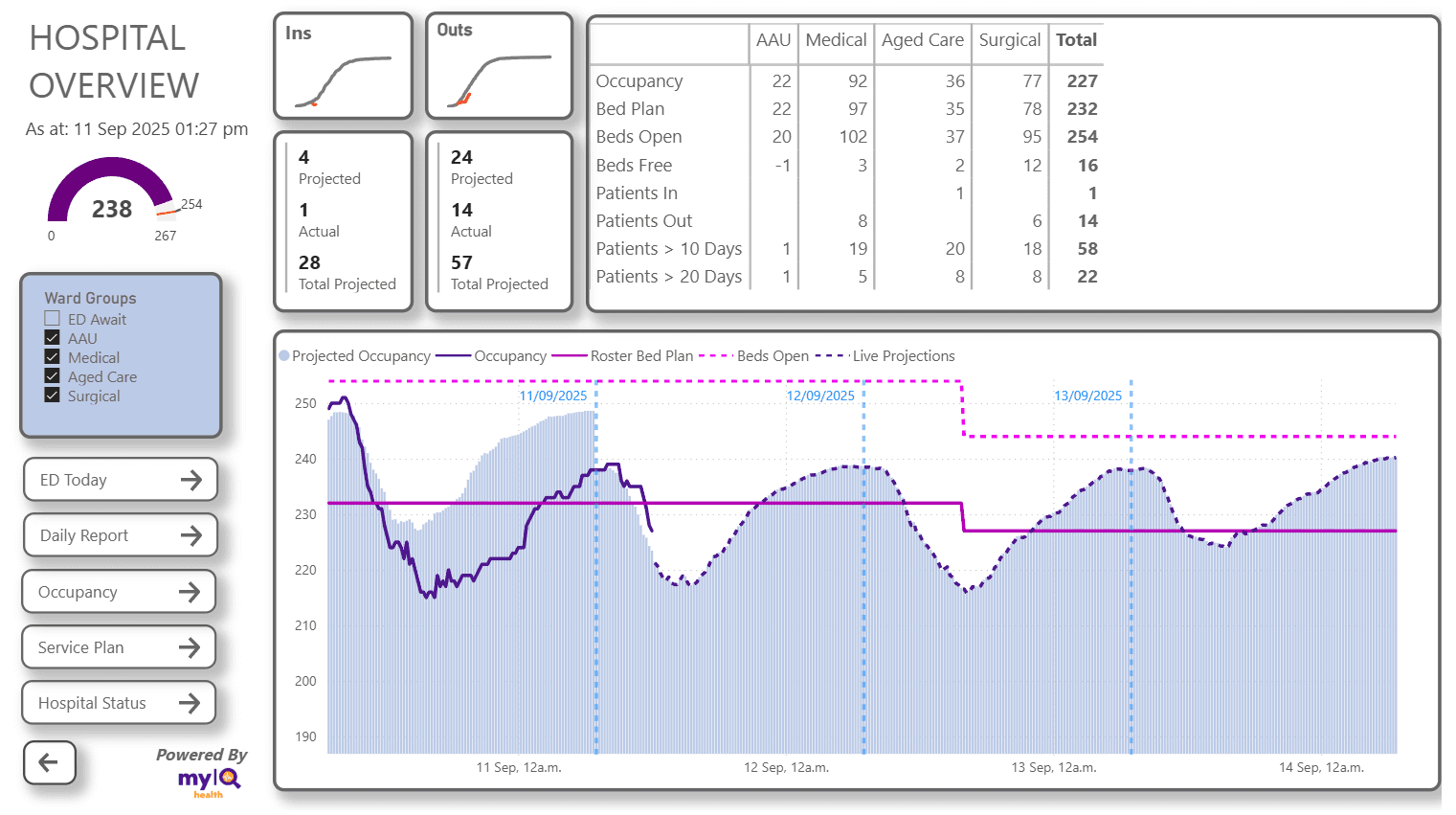
Hospital Overview Dashboard
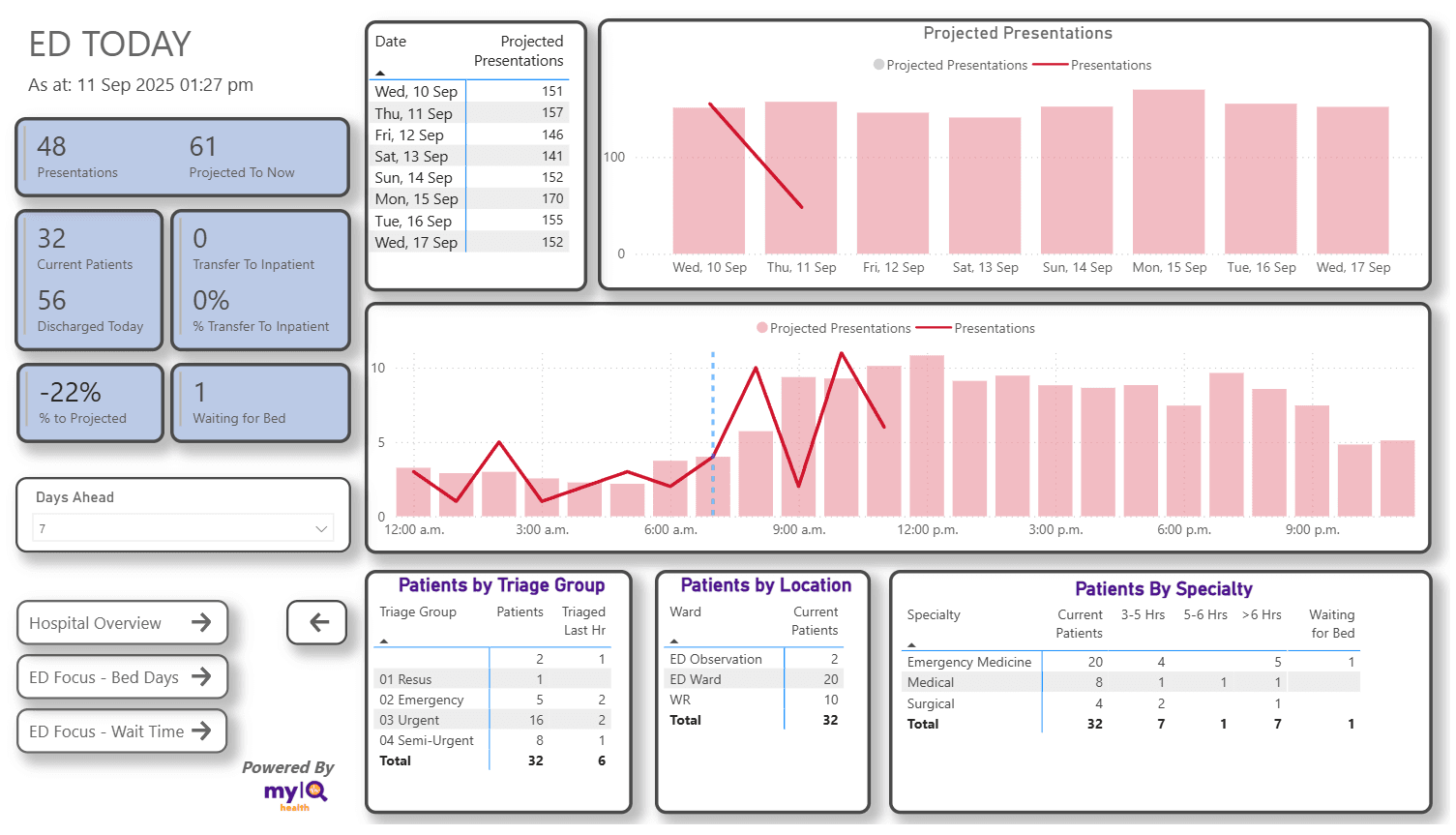
Emergency Department Dashboard
The AI Planning Loop
1. Set Assumptions
Planner sets assumptions via Claude conversation -- seasonal patterns, elective schedules, budget constraints.
2. AI Forecasting
AI forecasting runs industry best-practice time-series models across admissions, discharges, and transfers -- delivering ~96% accuracy.
3. Real-Time Projection
Short-term projections (24-72hr) combine real-time PMS data with forecast models for immediate operational decisions.
4. Dashboard Delivery
Power BI dashboards surface capacity plans, bed availability, and staffing recommendations for all stakeholders.
Compliance and Data Governance
MyIQ Health processes hospital operational data (admissions, discharges, transfers, bed census, rostering, and financial data) but does not process or store individual patient clinical records, diagnostic data, or treatment information. The platform is classified as an operational analytics tool, not Software as a Medical Device (SaMD).
New Zealand
Compliant with Health Information Privacy Code 2020 (HIPC) and Privacy Act 2020. Operational data anonymised and aggregated.
Australia
Designed for compliance with state-level health privacy legislation. SOC 2 Type II certified Azure infrastructure.
Cloud Infrastructure
Microsoft Azure hosting with SOC 2 Type II, ISO 27001 certification, and Australian data residency options.
Security Roadmap
Essential 8 cybersecurity maturity and NSQHS Standards alignment on the compliance roadmap.
See the Platform in Action
Schedule a live demo to see how AI-powered capacity intelligence works with your hospital data.
Request a Demo